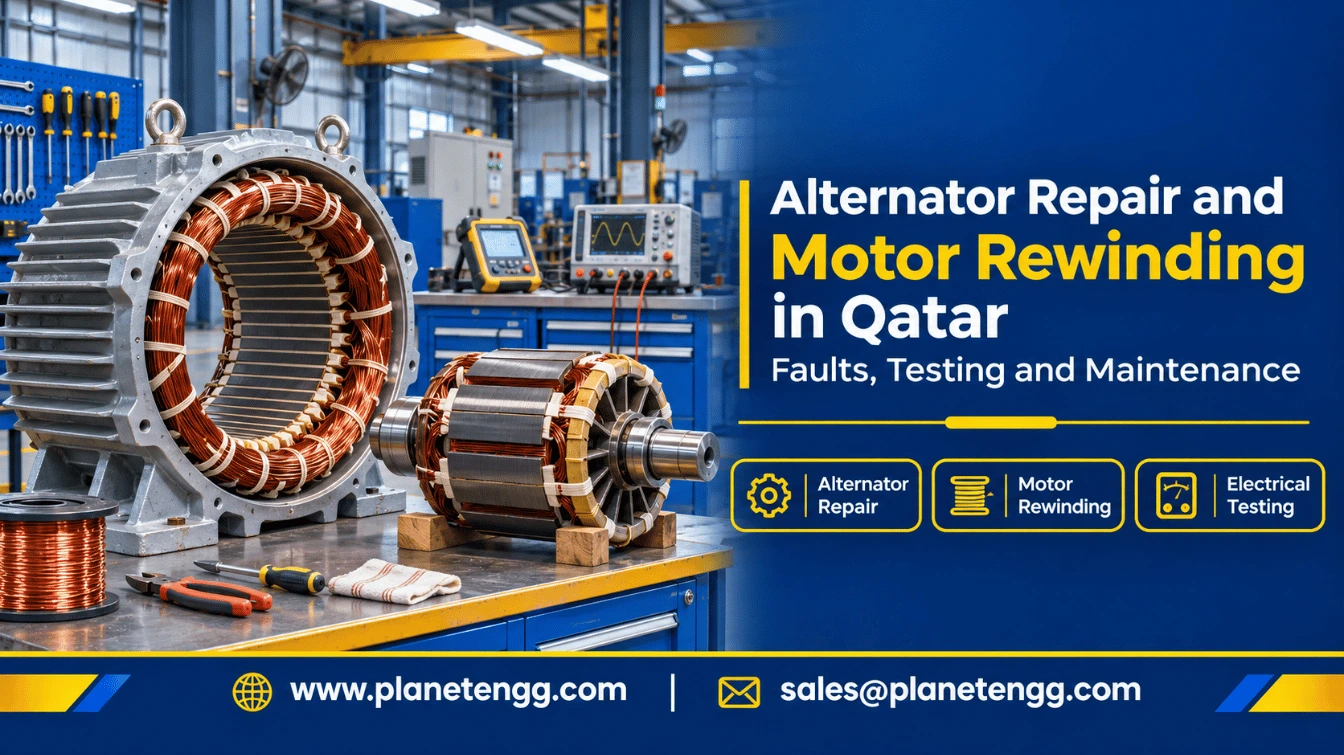
Alternator repair and motor rewinding in Qatar keep industrial generators, motors and electrically driven equipment in dependable operating condition. In Oil & Gas support facilities and BMS-equipped buildings, rotating electrical machines power standby supply, pumping, ventilation and other important plant functions.
This guide explains the warning signs of alternator and motor problems, the main causes of winding damage and practical inspection methods. It also describes what professional rewinding and testing involve. Planet Engineering supports these requirements through its electrical workshop and generator services.
Where Alternator Repair and Motor Rewinding Are Needed
Generator alternators and excitation systems
A generator alternator converts mechanical power from the engine into electrical output. Its stator, rotor, insulation, excitation equipment and connections must work together to maintain the specified voltage under changing loads. Therefore, low output, unstable voltage or repeated protection alarms can point to problems in the alternator, the automatic voltage regulator (AVR), the excitation system or the external electrical installation. Technicians test the machine to separate these faults before they start any winding repair.
AC motors in industrial and building services
AC motors drive pumps, fans, compressors, dewatering equipment and other rotating machinery. In Oil & Gas support installations, motor reliability affects utility and process-support equipment. Similarly, motors in BMS-equipped commercial buildings drive HVAC fans, chilled-water pumps and related mechanical services. However, a BMS only monitors alarms, so motor rewinding remains a separate engineering activity.
Common Signs of Alternator and Motor Faults
Not every electrical fault requires rewinding. However, the following symptoms call for inspection by qualified personnel:
- Repeated tripping or abnormal current: an overloaded motor, phase imbalance, shorted winding or supply fault can trip protective devices.
- Reduced or unstable generator voltage: winding damage, loose connections, excitation components, incorrect AVR settings or load conditions can all cause this.
- Excessive heat or burning smell: possible causes include blocked cooling passages, insulation deterioration, overloading and loose electrical connections.
- Unusual vibration or bearing noise: mechanical looseness, misalignment, unbalance or bearing damage can stress rotating components and eventually affect electrical insulation.
- Moisture, contamination or low insulation resistance: these signs may indicate that the winding insulation needs further evaluation before the machine returns to service.
Visual symptoms alone cannot identify the defective component.
Why Windings and Alternators Develop Problems
Thermal stress and operating load
Prolonged overloading, inadequate ventilation and frequent difficult starts raise winding temperatures and accelerate insulation ageing. For example, a correctly sized motor can still suffer thermal stress if it regularly runs with restricted airflow. Likewise, load imbalance and abnormal operating conditions create additional heating in generator alternators.
Dust, humidity and contaminated air
Qatar’s outdoor and industrial environments expose equipment to dust, humidity and corrosive conditions. Dirt that accumulates in cooling paths obstructs airflow, while moisture and contamination reduce insulation performance. As a result, the enclosure, ventilation and manufacturer guidance all matter for protection.
Electrical and mechanical causes
Loose terminals, voltage imbalance, switching transients, damaged bearings, vibration and deteriorated insulation can all contribute to failure. In generator sets, an apparent alternator fault may actually start in the excitation controls, cabling, connected loads or the drive engine. For this reason, root-cause diagnosis helps prevent repeat failures.
Alternator and Motor Inspection: A Practical Testing Sequence
Trained electrical technicians should carry out inspection using approved isolation, lockout/tagout and verification procedures. Before insulation testing, they disconnect or protect sensitive control electronics as required. Exact test methods and acceptance limits depend on machine design, voltage class, manufacturer instructions and site requirements.
Step 1: Record symptoms and operating conditions
First, identify the machine type, rating, duty, recent alarms and maintenance history. Then record available output readings, temperature, loading and vibration.
Step 2: Inspect electrical and mechanical condition
Next, check terminations, terminal boxes, cables, ventilation paths and visible insulation condition. In addition, examine the bearings, coupling, alignment, shaft and mounting arrangement. On a generator alternator, evaluate the excitation system and AVR separately from the windings.
Step 3: Perform suitable electrical tests
Typical tests include insulation resistance, winding resistance and phase comparison. Polarization index, surge or other diagnostic tests may suit particular machines, but technicians should never apply them indiscriminately. Instead, they should compare results against machine specifications and previous records, not generic limits.
Step 4: Establish the repair scope
Finally, the findings show whether the machine needs cleaning and drying, connection repairs, bearing work, insulation refurbishment, component replacement or a full rewind. The workshop should document the defect and the post-repair tests.
What Professional Rewinding and Refurbishment Involve
A rewind replaces damaged electrical windings using a documented winding specification and an insulation system suited to the machine. Proper practice preserves the specified electrical and mechanical characteristics.
Inspection and preparation
First, technicians document the winding data and inspect the core, laminations, slots, rotor and relevant accessories. Then they remove damaged windings using controlled methods that protect the core and surrounding components. They may also test the core condition before and after removal.
Rewinding, insulation and assembly
Technicians select compatible conductors and insulation materials for the design and duty. After that, they install, connect, insulate and secure the new coils according to the repair specification. Where inspection shows the need, they also address bearings, seals, cooling components and other worn parts. Finally, reassembly includes checks on alignment and clearances.
Post-repair verification
After repair, technicians perform the applicable insulation and winding tests and assess the mechanical running condition. Moreover, they use rotor balancing and operational tests where the machine and scope of work call for them. For alternators, they must also check output and excitation behaviour under the available and specified test conditions. Retain the results for later comparison.
Applications in Oil & Gas and BMS-Equipped Facilities
Oil & Gas support facilities
Generators, compressors, utility pumps, ventilation systems and auxiliary equipment often depend on AC motors or alternators. Therefore, repair planning should account for the machine’s installation, its duty and the site’s hazardous-area restrictions. Work on equipment designed or certified for classified locations needs additional specialist review and the applicable authorization. In other words, a general rewind does not by itself preserve hazardous-area certification.
Commercial buildings and facility management
Facility-management teams maintain standby generators, air-handling equipment, pump motors and other electrically driven plant. Control-panel alarms or BMS monitoring may reveal generator or motor problems. In addition, reports help facility engineers coordinate maintenance. However, motor rewinding is not BMS integration.
Preventive Maintenance Checks for Rotating Electrical Equipment
A structured maintenance routine helps identify developing problems before they become major faults. Still, maintenance frequency should follow the equipment manufacturer’s guidance, the operating duty and the actual site conditions.
Recommended checks include:
- keeping cooling passages and air filters clear;
- inspecting terminations for looseness or corrosion;
- measuring operating voltage, current and phase balance;
- monitoring bearing temperature and vibration;
- maintaining lubrication where the manufacturer specifies it;
- recording insulation-condition trends when appropriate.
For standby generators, coordinate scheduled running and testing with the generator and electrical-system maintenance plans. Above all, investigate abnormal noise, heat and alarms before blaming the windings.
How Planet Engineering Supports Alternator and Motor Rewinding in Qatar
Planet Engineering’s Motor Rewinding Services cover AC motors, generators and alternators, stators and rotors, and excitation-related equipment. Its published workshop capabilities include troubleshooting, rewinding, refurbishment, rotor balancing, dismantling and assembly, on-site installation and testing, and preventive maintenance.
The rewinding workshop also supports motors for dewatering and submersible pump equipment, depending on the machine type and technical assessment. Meanwhile, the related generator service team provides diesel generator fault diagnosis and alternator servicing. As a result, customers can coordinate electrical and mechanical maintenance when a generator fault has more than one contributing cause.
Learn more about Planet Engineering’s Motor Rewinding Services and Diesel Generator Service. For an assessment, share the nameplate, fault symptoms and available test records.
Frequently Asked Questions
Does low generator voltage mean the alternator needs rewinding?
No. Excitation, AVR, wiring, load or winding faults can all cause low voltage. Therefore, a technician should inspect the complete system and test the alternator before deciding on a rewind.
Can a motor be repaired without rewinding?
Yes. Depending on the diagnosis, a motor may need cleaning, bearing replacement, connection repairs, drying or other maintenance instead of a full rewind.
Which tests are important after motor rewinding?
Applicable checks may include winding resistance and insulation tests, mechanical inspection and an operational run. However, the test methods and acceptance criteria must match the specific machine and repair scope.
Do Qatar’s heat and dust affect alternators and AC motors?
Yes, they can. High temperature reduces cooling margin, while dust can obstruct ventilation and contamination can affect insulation. Consequently, routine inspection and manufacturer-approved maintenance help manage these risks.
Can Planet Engineering inspect alternators and motors on-site?
Yes. Planet Engineering lists field troubleshooting and on-site installation and testing among its electrical workshop services. Nevertheless, the exact work scope depends on equipment type, site access and a technical assessment.
Request an Alternator or Motor Inspection
Correct diagnosis, suitable rewinding materials and documented testing are essential to restoring industrial rotating electrical equipment. Planet Engineering supports alternator repair, AC motor rewinding, refurbishment and related generator maintenance for industrial customers in Qatar.
For a technical enquiry, call +974 4444 8200 or visit www.planetengg.com. Please provide the equipment rating, make and model, symptoms and operating application so the team can assess the next step.