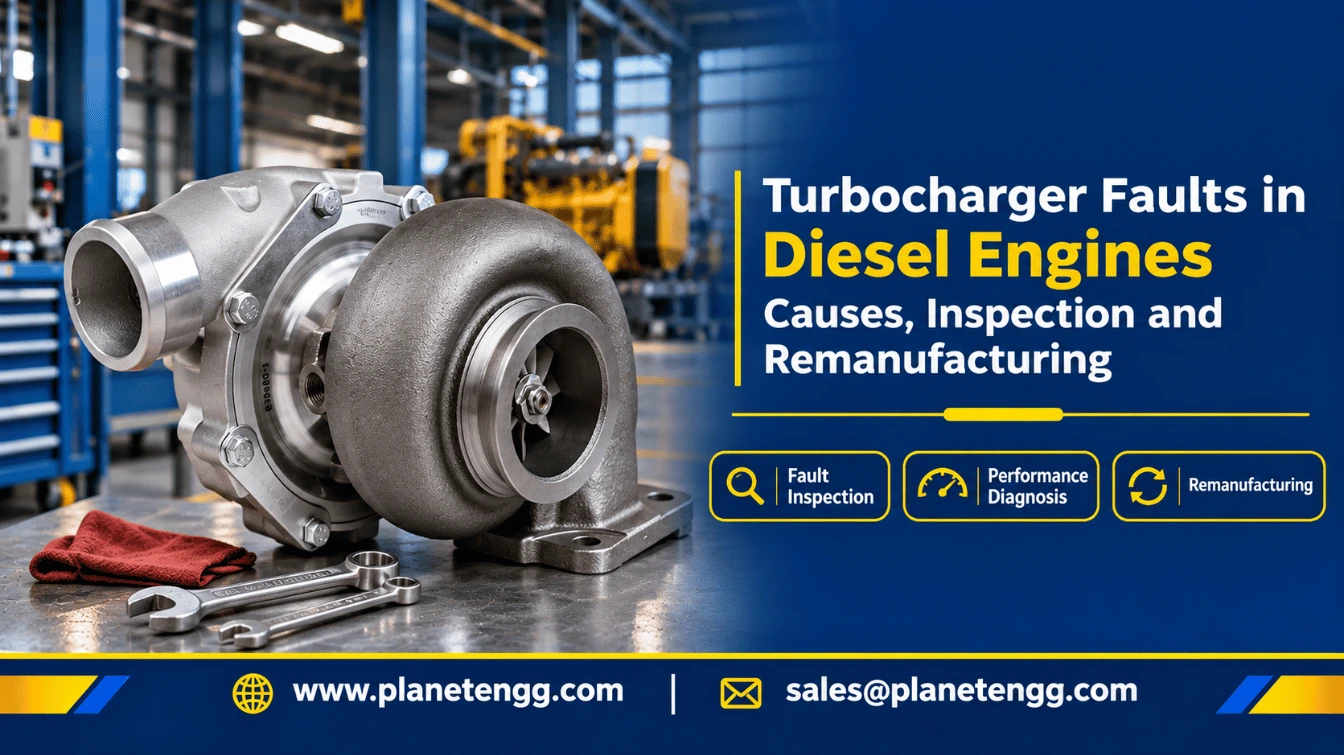
A turbocharger uses energy from the exhaust gas to compress the air entering the engine. That lets the engine burn fuel efficiently and produce more power from the same displacement. Turbocharged diesel engines drive generators, compressors, pumps and other equipment at oil and gas sites and in critical buildings.
A turbocharger spins at very high speed and depends on clean air, clean oil and controlled exhaust temperature. When any of these is compromised, performance falls and a single unit failure can lead to wider engine damage.
This article explains how turbochargers work, the warning signs and causes of faults, an inspection checklist and what remanufacturing involves.
How a turbocharger works and the warning signs of a fault
Hot exhaust gas spins a turbine wheel, which drives a compressor wheel on the same shaft. The compressor forces extra air into the engine. The shaft runs on bearings lubricated and cooled by engine oil and many units use a wastegate or variable geometry to control boost pressure.
Common warning signs include:
- Loss of power or slow response under load
- Black smoke, which points to insufficient air
- Blue-grey smoke or rising oil consumption, which points to oil passing the seals
- A high-pitched whine, siren or grinding noise
- Oil in the intake or intercooler piping, or oil around the exhaust outlet
- High exhaust temperature
- Hissing from boost leaks
These signs overlap with air filter and fuel system faults, so a systematic inspection is needed before the turbocharger is blamed.
Common causes of turbocharger failure
Oil starvation or contaminated oil
The shaft bearings run on a thin oil film. Low oil pressure, a blocked feed line, degraded oil or overdue oil and filter changes quickly wear the bearings and can seize the shaft.
Dust and foreign objects in the intake
A damaged or poorly fitted air filter, loose intake clamps or debris erode and damage the compressor wheel and upset its balance.
Exhaust-side damage
Debris from the engine or exhaust leaks upstream of the turbine damage the turbine wheel and housing.
Oil leakage through the seals
A blocked crankcase breather, a restricted oil drain or worn seals push oil into the intake or exhaust, causing smoke, deposits and rising oil consumption.
Heat soak and carbon build-up
Shutting down a hot engine straight from heavy load can leave oil in the bearing housing to bake into carbon deposits. These restrict oil flow at the next start. Follow the manufacturer’s cool-down guidance.
Boost leaks and restrictions
Cracked hoses, loose clamps, a leaking intercooler or a blocked exhaust make the turbocharger work harder to deliver the required boost.
Poor combustion
Faulty injectors or incorrect fuel calibration raise exhaust temperature and soot, which foul the turbine. Fuel injection faults can therefore damage the turbocharger as well as the engine.
Wastegate or actuator faults
A sticking or misadjusted wastegate or variable-geometry actuator leads to over-boost or under-boost.
Operating conditions in Qatar
Several local conditions put extra demand on turbochargers:
- Heat: high ambient temperatures raise intake air, oil and exhaust temperatures, which stress bearings, seals and oil quality.
- Dust and sand: a worn or poorly sealed air filter lets abrasive dust reach the compressor wheel.
- Standby duty: Generators that run rarely, or only at light load, can contribute to exhaust-side fouling from carbon and unburned fuel residue. Oil-drain blockage has different causes and should be investigated separately.
- Humidity and salt air: moisture corrodes clamps, fittings and connections on the intake and oil lines.
Regular air filter and intake inspection, oil and filter changes at the manufacturer’s intervals and a pre-summer check of the intake, charge air and exhaust systems help protect the turbocharger.
Turbocharger inspection checklist
Turbochargers run extremely hot and spin at very high speed. Allow the engine to cool, isolate it as the site procedure requires and follow the engine manufacturer’s instructions for all checks.
- Review the history: note the symptoms, the load at which they appear, the smoke colour, oil consumption and recent maintenance.
- Check the engine oil: confirm level, grade, condition and pressure.
- Inspect the air intake: check the air filter, ducting, clamps and hoses for damage and leaks.
- Inspect the charge air system: look for oil residue and leaks in the intercooler and piping.
- Inspect the exhaust side: check the manifold, gaskets and outlet for leaks or restrictions.
- Check oil feed and drain lines: look for blockages, kinks or leaks and check the crankcase breather.
- Examine the wheels and shaft: with the engine stopped and cool, look for contact marks, erosion or damage and check shaft play against the manufacturer’s limits.
- Check boost control: inspect the wastegate or variable-geometry actuator for free, correct movement.
- Measure boost pressure: compare the reading under load with the specification.
- Record and find the root cause: log the findings and identify why the fault occurred before fitting any replacement.
Repair, remanufacture or replace
The condition of the turbocharger decides the right course. Light damage may be repairable, while worn bearings, damaged wheels or scored housings usually call for a full rebuild or replacement.
Remanufacturing typically includes:
- Complete disassembly and cleaning
- Inspection of the housings, shaft and wheels against specification
- Replacement of bearings, seals and other wear parts
- Machining or replacement of worn or damaged components
- Balancing of the rotating assembly at speed
- Testing before the unit is released
The exact process depends on the turbocharger type and the workshop, so ask the service provider what is inspected, replaced and tested.
Whatever route is taken, the cause of the original failure must be corrected. Fitting a new or remanufactured unit without fixing an oil supply fault, a blocked drain, a leaking intake or a poor air filter will lead to a repeat failure. Good fitting practice includes:
- Replacing the oil and filter
- Cleaning or replacing the oil feed and drain lines
- Priming the turbocharger with oil before the first start
- Checking for leaks after start-up
- Monitoring boost pressure and temperature during the first hours of running
Planet Engineering’s turbocharger, engine and parts services in Qatar
Planet Engineering is an ISO 9001:2015, ISO 14001:2015 and ISO 45001:2018 certified provider of complete diesel generator solutions. Its workshops and parts center address the faults described above.
Remanufactured components
The Planet Parts Center offers a remanufacturing range that restores fuel injection systems, turbochargers and auto electrical parts to their original specifications.
Diesel engine overhaul
Comprehensive engine overhauls in dedicated workshops when wear or damage goes beyond a single component.
Diesel generator service, repair and maintenance
Preventive maintenance, servicing and repairs that cover the oil, air and exhaust checks that protect the turbocharger. See Engineering Services.
Fuel injection calibration
The fuel injection calibration center tests and calibrates injection equipment so that combustion does not overload the turbocharger.
Filters, lubricants and cooling support
Filters and lubricants through the Parts Center and radiator and heat exchanger services that keep engines within normal operating temperatures.
Generator rental
Diesel generator rentals can provide temporary power while equipment is in the workshop, subject to technical assessment and availability.
Frequently asked questions
What are the signs of a failing turbocharger on a diesel engine?
Typical signs are loss of power, black or blue-grey smoke, rising oil consumption, a whining or grinding noise, oil in the intake piping and high exhaust temperature. A full inspection is needed to confirm the cause.
Why does a faulty turbocharger cause blue smoke?
Blue-grey smoke usually means oil is passing the turbocharger seals into the intake or exhaust, often because of worn seals, a blocked oil drain or a blocked crankcase breather.
Is it safe to keep running an engine with a failing turbocharger?
No. Continued running risks wider engine damage, because wheel fragments or oil can enter the engine. In severe cases, oil drawn into the intake can cause the engine to overspeed. Stop the engine and have it inspected.
What is a remanufactured turbocharger?
It is a used unit that has been dismantled, cleaned and inspected, fitted with new bearings, seals and other wear parts, balanced and tested, so that it meets original specifications.
How can I protect a new or remanufactured turbocharger?
Fix the cause of the earlier failure, use the correct oil and a new filter, prime the unit with oil before the first start, keep the air intake clean and sealed and follow the manufacturer’s cool-down guidance.
Keep your turbocharged engines reliable
Clean air, clean oil, sound fuel delivery and timely inspection protect the turbocharger and the engine around it. Planet Engineering provides diesel generator service, engine overhaul, fuel injection calibration, remanufactured components and spare parts for industrial customers in Qatar.
For an inspection or technical enquiry, call +974 4444 8200 or visit planetengg.com.